Tesla's FSD Reality: The Q2 2027 Robotaxi Zone Restriction
Tesla has confirmed that unsupervised self-driving for private owners will be limited to its existing Robotaxi service areas in mid-2027, rather than offering nationwide coverage.
By Christopher Reed ·
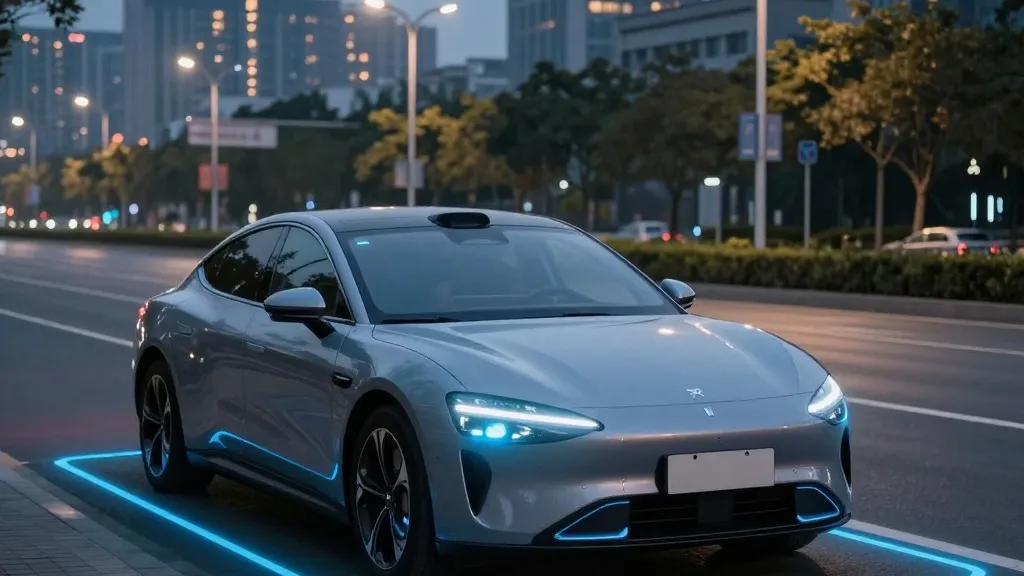
Tesla has officially set a target of the second quarter of 2027 for the launch of unsupervised Full Self-Driving in customer-owned vehicles. However, the feature will initially be restricted to the specific geofenced zones where Tesla’s Robotaxi service is already operating, marking a significant shift from the broader nationwide coverage previously expected by shareholders.
The timeline was established during the company’s third-quarter 2026 earnings call, which took place on October 21, 2026. Ashok Elluswamy, Tesla’s head of AI, clarified the scope of the update to investors. He explained that the initial rollout will not function as a standalone software package allowing owners to drive anywhere. Instead, it will allow vehicle owners to integrate their private cars into Tesla’s managed Robotaxi fleet for unsupervised operation within designated areas.
This development addresses a persistent question from retail shareholders, who submitted a query backed by approximately 1.1 million shares asking when unsupervised FSD would arrive in their personal vehicles. Elluswamy’s response indicated that the first step is not a general software update for unrestricted driving, but rather a mechanism for Tesla to operate owner-supplied vehicles within its existing network. Consequently, a driver will only be able to step out of the driver’s seat and let the car handle the journey while inside the specific zones where Tesla’s Robotaxi service is active.
The current operational footprint for these zones is relatively limited. Tesla’s Robotaxi service is currently active in six major U.S. metropolitan areas, though the service areas often cover only small portions of those cities. For example, the service in Miami primarily covers West Miami and a corridor toward Doral and Sweetwater. Orlando and Tampa saw similar launches in July with constrained geofences. Within these areas, the service typically avoids highways and complex urban environments, sticking to lower-speed routes.
In the San Francisco Bay Area, the service is not yet fully unsupervised. Due to regulations from the California Department of Motor Vehicles, which require a safety driver in every vehicle for systems not yet classified beyond Level 2 autonomy, Tesla has chosen to keep a human on board rather than release necessary data. This regulatory hurdle highlights the gap between the current deployment and the future promise of fully driverless operation in private hands.
The scale of the current unsupervised fleet remains modest. By the end of the third quarter, Tesla reported nearly 2 million cumulative unsupervised miles, a figure reached shortly after the Cybercab joined the Austin fleet. Third-party tracking data from earlier this year suggested that the number of fully driverless Teslas on the road was in the dozens, a fraction of the hundreds of thousands previously discussed by company leadership. Competitor Waymo had already established a presence in Orlando and Tampa before Tesla’s entry, accumulating over 3 million miles in the process.
This new timeline and scope contrast with past communications from Tesla leadership. In July 2025, Elon Musk stated that unsupervised FSD would be available for personal use in certain geographies by the end of that year. A year prior to that, he expressed surprise if unsupervised self-driving was not achieved the following year. Owners of vehicles equipped with Hardware 3 have also been informed that their onboard computers cannot support unsupervised FSD, with no clear upgrade path provided to date.
The shift to a Q2 2027 target narrows the product definition significantly. The promise is no longer that a car will drive itself anywhere via a simple software update. Instead, the vehicle joins Tesla’s fleet, operates within Tesla’s controlled zones, and follows Tesla’s operational terms. This means no unsupervised highway trips or cross-town commutes unless the owner’s route falls entirely within one of the designated Robotaxi geofences.
Elluswamy identified safety as the primary bottleneck for expansion, explaining that the company limits operations to simpler, lower-speed environments to manage risk. While he anticipates that these safety challenges will be resolved by the following year, he acknowledged that the exact timeline remains an estimate. The company is proceeding with this phased approach to ensure reliability before expanding the unsupervised capability to a wider audience.
Source: Electrek